Loading...
For PHP & IOP Teams
The step-down home for patients leaving your PHP or IOP.
Grata Health carries the medication plan your program built into long-term outpatient care — same regimen, no gap — with progress updates back to your clinical team.
The continuity problem
Every transition is where patients fall through.
Detox
Lost at handoff
Residential
No bed available
PHP
↑ Grata picks up here
No appt scheduled
IOP
↑ Grata picks up here
Patient disengages
Outpatient
Our promise to referring partners
The Grata Guarantee.
Fast response, right-fit care, and closed-loop updates for every patient you trust us with.
Every referral is acknowledged by a live member of our care team almost immediately — by phone, text, or email — so your patient is never left in a queue.
Why Grata
From your program to long-term care, without a gap.
Grata takes the handoff before discharge, continues the medication plan your team built, and keeps you informed long after the last group.

Same-day
Most appointments
Patients meet their treating clinician. Medication can be prescribed at the visit when clinically appropriate.
1–2 days
Medication delivery
Delivery takes 1–2 business days from prescribing. First prescriptions and refills are eligible, with shipping covered. Local pickup is also available.
7 days
Support each week
Support is available 6 a.m.–11 p.m. Eastern. We help with scheduling, coverage, technology, and pharmacy access.
Evidence and handoff guidance
Resources for PHP and IOP teams.
Clinical Leadership
The clinicians behind our model.
Dr. Tristan Yeung leads Grata’s clinical operations, and Dr. Scott Whetsell supervises our clinicians. Dr. Dexter Louie helped develop our clinical model as a consultant.
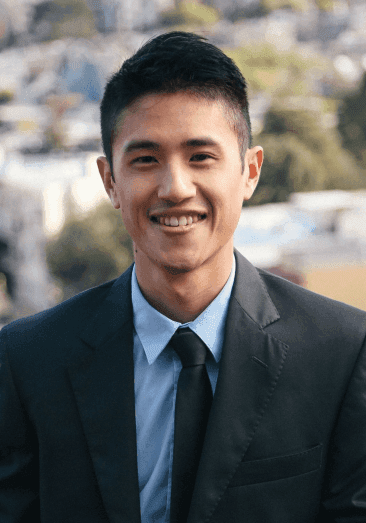
Dexter Louie, MD
Stanford Psychiatry · Grata Consultant
Clinical Assistant Professor at Stanford School of Medicine. Yale Addiction Psychiatry Fellowship. Published research on physician buprenorphine prescribing and is a consultant for Grata.
 Stanford
 Yale
Yale
Derick En’Wezoh, MD, MBA
Harvard · Stanford
Harvard MD. Founding team at Viz.ai, where he led growth as the company scaled to a $1B+ valuation and hundreds of hospitals. Stanford Biodesign alumnus.
 HarvardStanford
Aditya Narayan
Stanford MD/MBA · Knight-Hennessy Scholar
Knight-Hennessy Scholar at Stanford School of Medicine. Built digital health tools for opioid use disorder treatment access through the Virginia Harm Reduction Coalition. Fulbright Scholar.
StanfordCommon questions from PHP and IOP teams

No. Grata Health is built for the outpatient phase after your program — we pick up where your prescribing leaves off and continue the plan your team established. If your program doesn't have an in-house prescriber, we can fill that role too, but most partners refer to us at step-down.
During discharge planning — typically the final two weeks. That gives us time to verify insurance, review the record, and schedule the first telehealth visit before the patient's last day, closing the gap that derails so many step-down plans.
Yes. Our providers regularly take handoffs mid-titration. We review the dosing history from your team, talk with the patient about how they're responding, and continue the plan — adjusting only when clinically appropriate.
We continue managing MAT across both levels, sharing updates with each team as appropriate. The patient keeps a single prescribing relationship the whole way through — no new provider at every transition.
With patient authorization, we send regular updates covering medication changes, adherence, and clinical concerns. Your team keeps visibility into long-term outcomes for the patients you stabilized.
We coordinate the warm handoff back to your admissions team and share recent medication history and clinical notes. Once the patient is ready to step down again, we resume MAT without re-intake friction.
Also for
Other partners we work with:
Ready to partner with Grata?
Schedule a 30-minute Lunch & Learn to walk through how we work with PHP and IOP teams like yours — or send your first referral today at partner.grata-health.com.