My First Sober Holiday Season: A Patient's Reflection

The following composite scenario is educational and does not describe a particular Grata Health patient or promise a similar result.
The weeks between Thanksgiving and New Year's have always felt heavy. Even before my opioid use spiraled, the holidays carried this weight — family expectations, forced cheerfulness, the pressure to be grateful on command. But last year was different. Last year, I was three months into Suboxone treatment and genuinely terrified of the upcoming season.
I wasn't sure I could do it. Sober holidays felt like a contradiction. Every celebration I could remember involved drinking, using, or both. How do you celebrate without an escape hatch?
Now, looking back from the other side, I can tell you: it was hard. But it was also the first time in years I actually felt the holidays instead of just surviving them.
The Thanksgiving I Almost Canceled
Two weeks before Thanksgiving, I seriously considered bailing. My family didn't know the full extent of my addiction — they knew I was "getting help," but the details stayed vague. The thought of sitting at that table, fielding questions about my life while white-knuckling through dinner, felt impossible.
A telehealth provider helped me think through the decision during a check-in. She didn't tell me I had to go. She asked what felt hardest about it.
"The questions," I said. "And the wine."
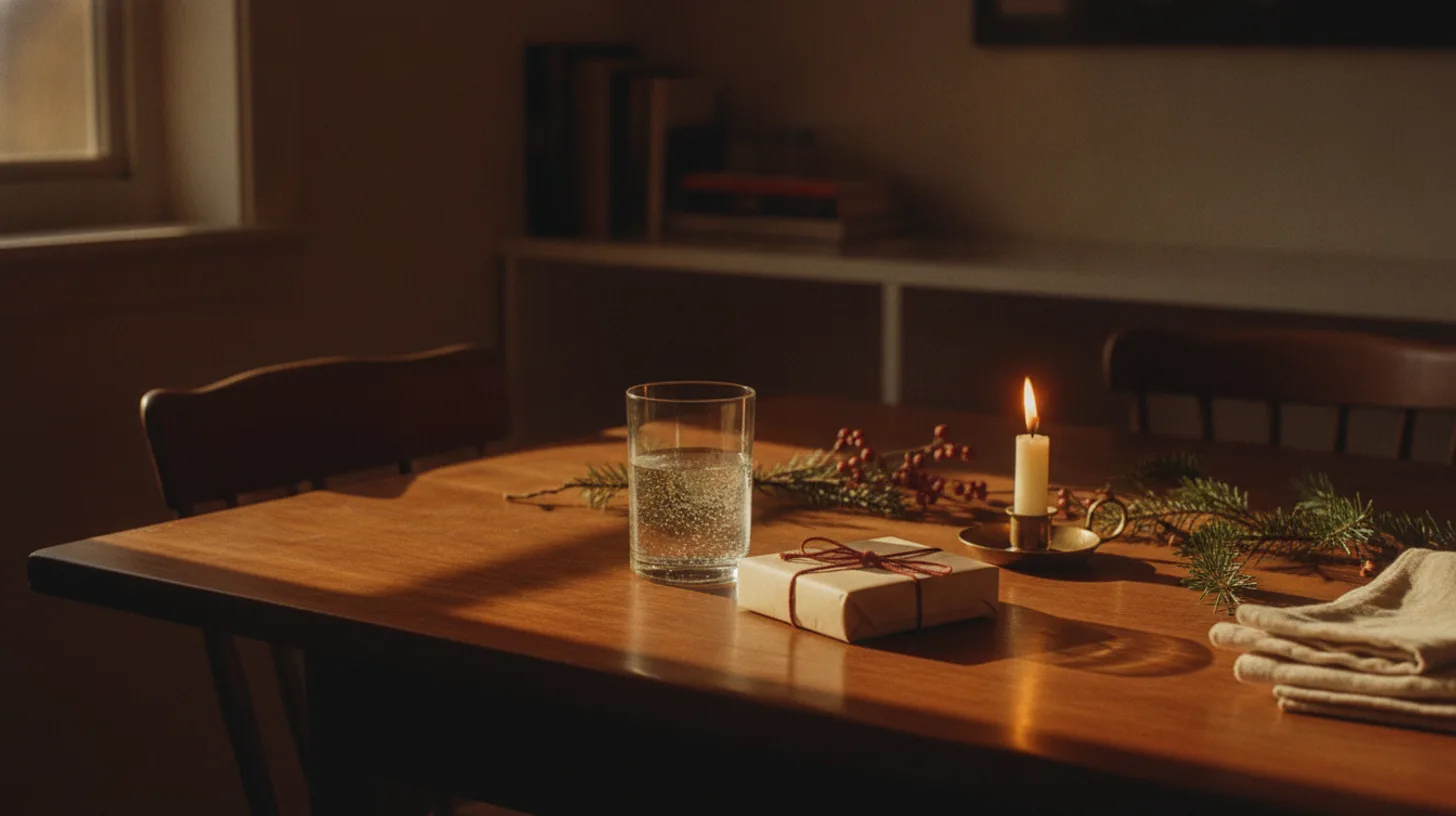
We made a plan. I'd bring my own drinks — fancy sparkling water in a wine glass, so no one would notice. I'd have an exit strategy: my car parked where I could leave if needed, a friend on standby for a rescue text. And I'd practice one simple phrase: "I'm doing really well, thanks for asking."
The day itself was messy. My uncle made a toast about gratitude and I felt like a fraud. My cousin's new boyfriend asked what I did for work, and I stumbled through an answer because I'd been between jobs for months. But I also noticed things I'd never noticed before.
My mom's hands shook slightly when she carved the turkey — when did that start? My nephew told me about his Lego project in excruciating detail, and I actually listened instead of zoning out. My sister caught my eye across the table and smiled, and it felt like she was saying: I see you trying.
I left early, but I left sober. And that felt like winning.
The Office Holiday Party Minefield
The week after Thanksgiving, my new job threw a holiday party. I'd only been there six weeks — still in that probationary zone where you're proving yourself. The party was at a bar. Of course it was.
I almost didn't go. But my therapist reminded me that isolation wasn't recovery either. So I went, armed with my coping strategies and a pocket full of mints because I was convinced everyone could somehow tell I was in treatment.
Here's what I learned: most people at work parties are too worried about themselves to scrutinize you. I ordered a club soda with lime. One person asked if I was doing Dry January early. I said yes. They said, "Good for you, I should too," and that was it.
The hard part wasn't the party itself. It was standing there, completely present, while the night got progressively looser around me. Voices got louder. Jokes got sloppier. I watched my coworkers cross that invisible line from "fun tipsy" to "messy drunk" and felt... relieved? That I wasn't crossing it with them?
I left after an hour. No drama. No close calls. Just a quiet drive home where I realized I could still do work events without needing substances to tolerate them.
Christmas Eve: The Hardest Night
Christmas Eve almost broke me. Not because of cravings — those had leveled out significantly by month four on Suboxone. But because of loneliness.
My family celebrated on Christmas Day, so the 24th was mine to fill. In past years, that meant using. Now it meant... what? Sitting alone in my apartment, watching other people's Instagram stories of tree-trimming and cookie-baking?
I called my sponsor at 7 PM, voice shaking. "I'm not going to use," I said. "But I don't know how to be alone with myself right now."
He talked to me for two hours. We didn't talk about addiction. We talked about movies we loved as kids. He told me about his first sober Christmas Eve, which he spent at a 24-hour diner eating pie and reading a paperback thriller. It sounded mundane. It sounded perfect.
I didn't go to a diner. But I did take a walk around my neighborhood, looking at lights. I stopped at a gas station and bought terrible hot chocolate. I came home and watched Home Alone — hadn't seen it since I was maybe twelve. And I went to bed sober, which felt less like victory and more like survival.
But getting through the night safely counted. That was something I had discussed during video visits, and that night, I finally believed it.
New Year's Eve: A Deliberate Choice
By New Year's Eve, I'd made peace with being the person who stays home. I'd seen the "ring in the new year" posts on social media — all those parties and countdowns and champagne toasts. A year ago, I would've been in the middle of it, chemically enhanced and barely present.
This year, I made a deliberate choice: I invited my sister over. Just us. We ordered Thai food and played cards. At midnight, we toasted with sparkling cider and she said, "I'm proud of you." And I cried, which was embarrassing but also... good?
She asked me what my resolution was. I almost said something generic about "staying healthy." But I told her the truth instead: "To keep showing up for myself, even when it's boring."
She laughed. "That's the least inspiring resolution I've ever heard."
"Yeah, but it's the realest one."
We stayed up until 2 AM, just talking. She told me she'd been worried about me for years but didn't know how to bring it up. I told her about starting treatment, about check-ins and medication management and the slow, unglamorous work of rebuilding trust — with others, but mostly with myself.
It wasn't a dramatic New Year's moment. There were no fireworks. But there was honesty, which felt more valuable than any party I'd missed.
What I Learned About Sober Holidays
Looking back, here's what surprised me most about that first holiday season in recovery:
The hard parts weren't what I expected. I thought I'd struggle with parties and alcohol everywhere. And yes, those were challenging. But the hardest moments were the quiet ones — being alone with my thoughts, sitting with uncomfortable emotions instead of numbing them, learning to tolerate boredom without reaching for an escape.
You don't have to be perfect. I left Thanksgiving early. I skipped two work events entirely. I spent Christmas Eve on the phone with my sponsor instead of with people. None of that meant I was failing. It meant I was learning my limits and honoring them.
Presence is a gift — even when it's painful. Being fully present at that Thanksgiving table, noticing my mom's shaking hands and my nephew's rambling story, hurt in a way using never did. But it also meant I was there, really there, instead of watching my life happen from behind a fog.
The little victories matter most. Ordering club soda at a work party. Walking away from a difficult situation before it became a crisis. Asking for help when I needed it. These weren't Instagram-worthy moments. But they were the foundation of staying sober through the hardest season of the year.
To Anyone Facing Their First Sober Holidays
If you're reading this and the holidays feel impossible right now, I want you to know: you can do hard things. You're probably already doing them — showing up for treatment, taking your medication, building a support network, learning to sit with discomfort.
The holidays are just one more hard thing. And you don't have to do them perfectly.
Make an exit plan. Bring your own nonalcoholic drinks. Leave early if you need to. Before a difficult day, confirm which members of your personal or professional support network are actually available and how to reach crisis help after hours.
Find one person who knows what you're going through and check in with them regularly. Read the holiday coping strategies and actually use them. Practice saying "I'm doing really well, thanks" until it feels natural.
And remember: you're not trying to have the best holiday season ever. You're just trying to get through it sober. That's enough. That's more than enough.
Six Months Later
It's May now. The holidays are long past. And I'm still here, still sober, still showing up for my weekly check-ins and taking my medication and doing the boring, unglamorous work of recovery.
Last month, my sister texted me out of nowhere: "Remember New Year's Eve? That was one of my favorite nights in years."
Mine too.
The holidays still aren't easy. But now I know they're possible. And that knowledge — that hard-won proof that I can survive difficult things without using — carries me through every challenging day that follows.
If you're facing your first sober holiday season, or your second, or your tenth, know that it gets easier. Not easy, but easier. The weight lightens. The moments of presence start to outnumber the moments of white-knuckled survival. You start to build new traditions that don't involve substances.
And one day, you might look back and realize: this is what you were fighting for all along. Not perfect holidays, but real ones. Not an escape from your life, but the chance to actually live it.
That's worth the hard work. That's worth showing up for, even when it's scary, even when it's boring, even when you'd rather do literally anything else.
Keep going. You're doing better than you think.
If you're struggling with opioid use and want to explore treatment options, contact Grata Health to ask about telehealth availability in Virginia, Ohio, or Pennsylvania. You don't have to navigate this alone.
Grata Health offers same-day telehealth appointments in Virginia, Ohio, and Pennsylvania and accepts most insurance plans. Specific benefits and eligibility vary by plan and individual circumstances.
About the author

Editorial Team
The Grata Editorial Team produces educational content about opioid use disorder, treatment access, and recovery. Articles are written to explain complex topics in clear, supportive language and help readers prepare useful questions for qualified professionals.
View full profileReviewed by
Clinical Review Team
The Grata Care Team supports people seeking treatment for opioid use disorder. When an article names the Grata Care Team as its reviewer, that attribution identifies the clinical review associated with that article.
View full profileReady to start your recovery?
Grata Health offers same-day telehealth appointments in Virginia, Ohio, and Pennsylvania and accepts most insurance plans.