Finding My People: Community in Addiction Recovery

This composite story illustrates common experiences of isolation and connection in recovery; it is not a report about a particular Grata patient.
For two years, I didn't answer my phone unless I absolutely had to. I'd let family calls go to voicemail, watched friend group chats pile up with unread messages, and perfected the art of making myself invisible. Active addiction had turned me into a ghost in my own life — not because I wanted to disappear, but because the shame made it impossible to show up as anything other than a lie.
What I didn't realize then was that isolation wasn't just a symptom of my opioid use disorder. It was fuel. The lonelier I got, the harder it became to imagine a way out. And the harder that seemed, the more I used.
Connection — real, messy, vulnerable human connection — became one meaningful part of recovery. It did not replace medication, clinical care, or an individualized treatment plan.
The Loneliness No One Talks About
Before I started using, I had friends. A job. Sunday dinners with my parents. But opioid use disorder has a way of quietly eroding all of that. First you cancel plans because you're too sick or too high. Then you stop getting invited. Then you stop wanting to be invited because the performance of pretending everything's fine is exhausting.
What surprised me most wasn't losing the people I thought would stick around. It was how profoundly alone I felt even when I was trying to get help. That first week on Suboxone treatment, I felt like I was white-knuckling through this massive life change with nobody to talk to who actually understood.
My therapist was kind. My doctor was supportive. But they'd never woken up sick, never counted pills to see if they had enough to make it through the weekend. There's a specific kind of loneliness that comes from feeling like you're the only person on earth who's been through this — even though intellectually you know that's not true.
I remember scrolling through my phone contacts one night, trying to think of a single person I could call just to say "this is really hard and I'm scared I'm going to fail." I came up empty. That's when I realized: if I was going to do this, I needed to find my people.
Walking Into That First Meeting
The first recovery meeting I went to, I sat in my car for twenty minutes debating whether to go in. I'd found it through a link my telehealth provider sent after I mentioned feeling isolated. It was a virtual peer support group for people in medication-assisted treatment.
I almost backed out three times. What if I had to talk? What if they judged me for still being on medication? What if they were all further along in recovery and I felt like the only mess in the room?
But I clicked the Zoom link. And within five minutes, someone shared a story so similar to mine that I actually gasped. The same shame spiral. The same fear of disappointing people. The same relief when buprenorphine finally gave them a foothold. I didn't say a word that whole hour, but I cried twice. Not sad crying — relieved crying. The kind that comes from finally feeling less alone.
After the meeting, three people messaged me privately just to say "welcome" and "glad you're here." No pressure. No advice. Just acknowledgment that showing up was hard and they were glad I did it.
I went back the next week. And the week after that.
Learning to Be Seen Again
One of the strangest parts of early recovery was relearning how to be honest with people. I'd spent so long hiding and performing that I didn't know how to just... exist as myself anymore. The mask had been on so long I wasn't sure what was underneath.
Group therapy through my treatment program helped with that. At first I hated it — the vulnerability felt excruciating. But there's something about sitting in a circle of people who are all struggling with similar things that makes honesty feel safer. Nobody's performing. Nobody's pretending they have it all figured out.
I remember the first time I shared about relapsing after three months of stability. I was terrified people would think I was failing, that I didn't belong there anymore. Instead, half the group nodded in recognition. One guy said, "Yeah, that happened to me twice before things stuck. You're still here, though. That's what counts."
That's when I started to understand: community in recovery isn't about being perfect together. It's about being imperfect together and choosing to keep showing up anyway.
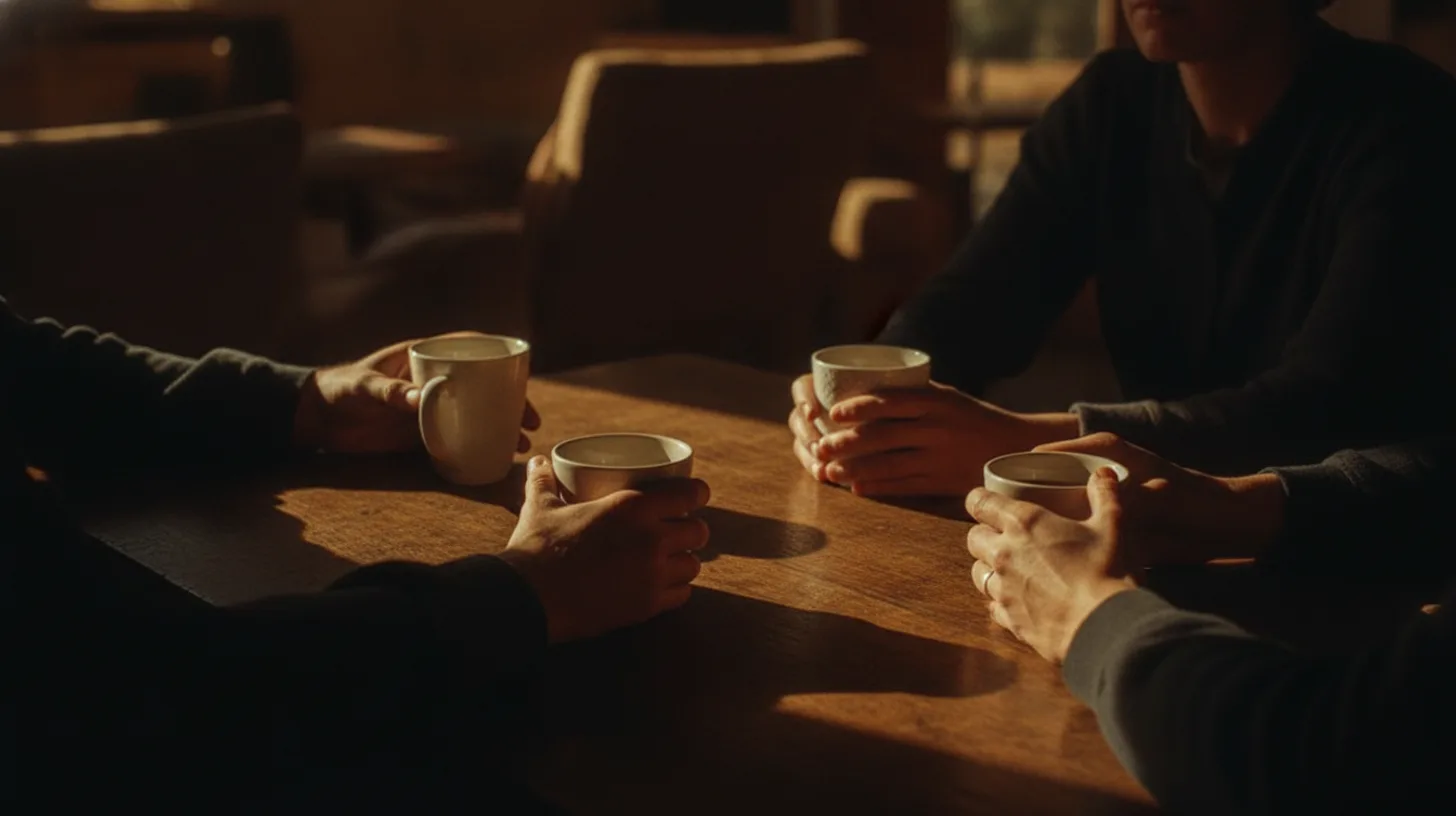
The friendships that formed in those sessions surprised me. People I never would have crossed paths with in my old life became the ones I'd text when I was having a hard day. We started getting coffee before meetings. Celebrating each other's milestones. Showing up when someone was struggling.
For the first time in years, I felt like I belonged somewhere.
Virtual Communities That Bridged the Gaps
Living in rural Ohio, finding in-person recovery support wasn't always easy. There was a meeting in my town, but it was only once a week and didn't always align with my schedule. That's where online communities became a lifeline.
I joined a Discord server for people in MAT, a Reddit community focused on harm reduction, and a private Facebook group for parents in recovery. Each space offered something different. The Discord was great for real-time support when I was anxious at 2 AM. Reddit had incredible resources and science-backed information. The Facebook group reminded me I wasn't the only person trying to rebuild trust with their kids while managing treatment.
What made virtual communities so valuable wasn't just the convenience — though being able to connect from my couch in my pajamas definitely helped. It was the diversity of experiences. I could hear from someone in Pennsylvania navigating the same Medicaid coverage questions I had, or someone in Virginia who'd found a similar telehealth provider.
The anonymity helped too. There were things I could say to internet strangers that I wasn't ready to voice in person yet. That practice with vulnerability online made it easier to eventually open up in my local groups.
Ready to start your recovery journey with support from day one? Grata Health connects you with treatment and community resources in Virginia, Ohio, and Pennsylvania.
The Power of Being Understood
There's a moment I think about a lot. I was about six months into treatment and having a rough week. Nothing catastrophic — just that low-level anxiety and emptiness that sometimes shows up in early recovery. I mentioned it casually in my support group chat, not really expecting much.
Within an hour, I had a dozen messages. Someone sent me a meme that perfectly captured the feeling. Another person shared a playlist they'd made for days like that. Someone else offered to hop on a call if I wanted to talk. And one person just said, "Yeah, I feel that. You're not alone in it."
That's when it hit me: this was what I'd been missing all those years. Not someone to fix me or save me or tell me what to do. Just people who got it. Who'd been there. Who could sit with me in the hard stuff without trying to make it go away.
Being understood is different than being loved or supported, though it includes both. It's the specific recognition that comes from shared experience. It's someone saying "I know exactly what you mean" and actually meaning it.
That understanding went both ways. As I got more stable in my recovery, I started being able to offer it to others. Welcoming new people to meetings. Answering questions in online forums. Sharing my story when it felt like it might help someone feel less alone.
Helping others didn't just feel good — it reinforced my own recovery. Every time I reminded someone else that relapse doesn't mean failure, I reminded myself too. Every time I celebrated someone else's milestone, I recommitted to my own path.
Building Friendships Beyond Recovery
About a year in, something shifted. The friendships I'd formed in recovery spaces started extending beyond our shared struggles. We were still showing up for each other around treatment and triggers and hard days. But we were also just... living together.
Game nights. Hiking trips. Group texts about TV shows we were watching. Birthday parties. Regular coffee dates where we talked about work drama and dating mishaps and family stuff, not just recovery.
That evolution felt important. It meant I was building a life, not just managing a condition. The people I'd met through my medication-assisted treatment program weren't just my "recovery friends" — they were becoming some of my closest friends, period.
I also started reconnecting with old relationships I'd thought were lost. My sister, who I'd barely spoken to in three years, reached out after seeing on social media that I was doing better. We met for lunch and I told her everything — the isolation, the treatment, the community I'd found. She cried and said she'd been waiting for me to be ready to let her back in.
Having solid recovery community made those reconnections possible. I had people who understood when family stuff brought up old shame or anxiety. I had a support system that could hold me steady when rebuilding old relationships felt scary.
Recovery Isn't a Solo Journey
Here's what I wish I'd known at the beginning: you can't do this alone. Not because you're weak, but because that's just not how human beings work. We're wired for connection. Isolation makes everything harder — especially recovery.
Finding community didn't mean I stopped doing the individual work. I still go to counseling, take my medication, practice my coping skills, work on my daily recovery routine. But having people in my corner transformed all of it from a lonely grind into something that actually felt sustainable.
Not everyone who starts treatment with me is still in my life, and that's okay. People move. Life changes. Recovery paths diverge. But the experience of finding those connections taught me I could do it again. That there are people out there who will get it. That I'm worth showing up for, mess and all.
If you're reading this and feeling isolated in your recovery — or in active use and unable to imagine connecting with anyone again — I want you to know: there are people waiting to welcome you. Support groups. Online communities. Treatment programs that prioritize connection. Peers who've been exactly where you are and made it through.
You don't have to have it all figured out before you reach out. You don't have to be "good enough" to deserve support. You just have to be willing to show up, even if it's terrifying at first.
Taking the First Step
Looking back, that first Zoom meeting I almost skipped changed everything. Not because it fixed me overnight, but because it showed me there was another way to do this. A way that didn't involve white-knuckling through recovery alone, pretending I had it all together, never asking for help.
Community taught me that recovery could include laughter and genuine friendship and feeling proud of myself. That it wasn't just about stopping opioid use — it was about building a life worth staying present for.
If you're ready to start that journey, telehealth treatment can be one part of a broader support plan. Ask any provider what clinical and recovery-support services are actually included, and choose community resources that feel safe and useful to you.
Explore treatment options in Virginia, Ohio, and Pennsylvania. Confirm appointment availability, included services, and insurance participation before enrolling.
Grata Health offers same-day telehealth appointments in Virginia, Ohio, and Pennsylvania and accepts most insurance plans. Specific benefits and eligibility vary by plan and individual circumstances.
About the author

Editorial Team
The Grata Editorial Team produces educational content about opioid use disorder, treatment access, and recovery. Articles are written to explain complex topics in clear, supportive language and help readers prepare useful questions for qualified professionals.
View full profileReviewed by
Clinical Review Team
The Grata Care Team supports people seeking treatment for opioid use disorder. When an article names the Grata Care Team as its reviewer, that attribution identifies the clinical review associated with that article.
View full profileReady to start your recovery?
Grata Health offers same-day telehealth appointments in Virginia, Ohio, and Pennsylvania and accepts most insurance plans.